

MBI’s Management Team
MBI provides an open platform to bring outstanding scientists and their projects to Singapore while providing high-quality training for students and scientists in quantitative systems approaches to understanding biomechanical functions.
The Mechanobiology Institute’s mission is to understand the mechanical aspects of cells and tissues that create organism form and function, define a fundamental set of mechanobiological operations from which these complex biological functions are built, establish this as a world-wide standard to unify the description and understanding of normal and diseased functions, and develop a robust multidisciplinary approach to mechanobiology.
Together, we are working on new ways of studying diseases through the mechanisms of molecule, cell and tissue mechanics to further the advancement of the discipline and the future of mechanobiology.
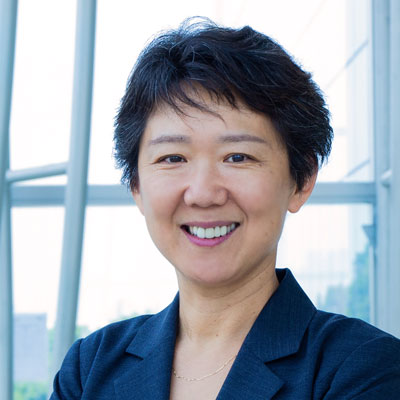
Rong Li, Director
Director and Principal Investigator, Mechanobiology Institute
Distinguished Professor, Department of Biological Sciences, NUS
Prof Li joined the MBI from Johns Hopkins University, where she was a Bloomberg Distinguished Professor at the School of Medicine and the Whiting School of Engineering since 2015. Prof Li is also the director of the Center for Cell Dynamics at the School of Medicine’s Institute for Basic Biomedical Sciences.
Prof Li is a globally respected leader in the study of cellular dynamics and mechanics. Her interdisciplinary research integrates genetics, quantitative imaging, biophysical measurements, mathematical modelling, genomics and proteomics — to understand how eukaryotic cells transmit their genomes, adapt to the environment, and establish distinct organisation to perform specialised functions. She has made seminal discoveries in the regulation of cell division, cell polarity, the actin cytoskeleton, aneuploidy and proteostasis. The insights gained from her research have contributed to the fundamental understanding of cancer and age-related diseases. Read more about Prof Li’s research
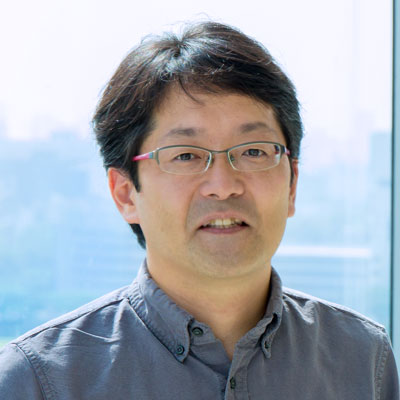
Yusuke Toyama, Deputy Director
Deputy Director, Mechanobiology Institute
Associate Professor, Department of Biological Sciences, NUS
Assoc Prof Toyama joined MBI and the Department of Biological Sciences, NUS, in 2010. He trained in physics and laser engineering in Osaka University, Japan before applying his knowledge to study biophysics and mechanobiology at Duke University, USA. At MBI, Assoc Prof Toyama investigates cell and tissue dynamics, with a focus on apoptotic force and collective cell migration. Read more about Prof Toyama’s research
As Deputy Director of MBI, he is responsible for Corporate Services and Academic Programs.
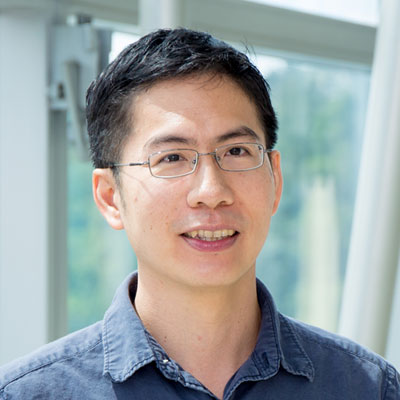
Pakorn Tony Kanchanawong, Deputy Director
Deputy Director, Mechanobiology Institute
Associate Professor, Department of Biomedical Engineering, NUS
Assoc Prof Pakorn ‘Tony’ Kanchanawong joined MBI and the Department of Biomedical Engineering, NUS, in 2011. After his training in biophysics from Stanford University, USA, he collaborated on the development and application of iPALM 3-D superresolution microscopy at NIH, USA. At MBI, Assoc Prof Kanchanawong focuses on visualizing and understanding the nanoscale architecture of cellular structures involved in cell migration, cell adhesions, and mechanotransduction. Read more about Prof Kanchanawong’s research
As Deputy Director of MBI, he is responsible for Infrastructure, Facilities, and Safety.
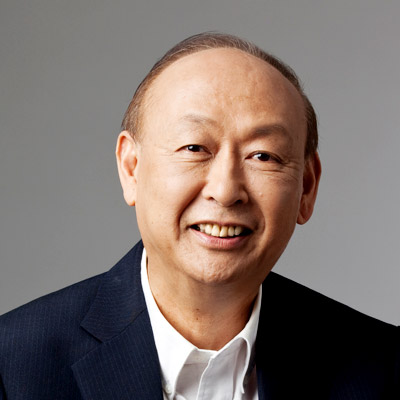
Hew Choy Leong, Senior Advisor and Emeritus Professor
Senior Advisor & Emeritus Professor
Emeritus Professor, Department of Biological Sciences, NUS
After spending more than 30 years as a professor at the Memorial University of Newfoundland and the University of Toronto in Canada, Prof Hew took up the position as the Head of Biological Sciences, National University of Singapore in 1999. He has successfully reorganised the department into a research – intensive department with strong research niches in biophysical science, cell and molecular biology and environmental science/biodiversity. He also chaired a working group in putting up the Mechanobiology proposal which was subsequently awarded by the National Research Council as the fourth Research Centre of Excellence (now called MBI) in Singapore. Read more about Prof Hew’s research
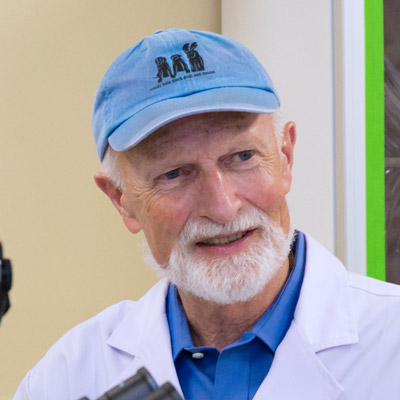
Michael Sheetz, Founding Director
Collaborator, Mechanobiology Institute, NUS
Professor, Department of Biochemistry & Molecular Biology, UTMB
Prof Sheetz joined MBI from Columbia University. In 2006, he was recruited to lead the Research Centre of Excellence project in Mechanobiology by Prof Hew of the National University of Singapore’s Department of Biological Sciences. Following the successful award and founding of MBI in 2009, Prof. Sheetz led the institute for 10 years and built it into a world-leading research centre in the field of mechanobiology. He is currently at the University of Texas Medical Branch at Galveston in the Department of Biochemistry and Molecular Biology. Read more about Prof Sheetz’s research
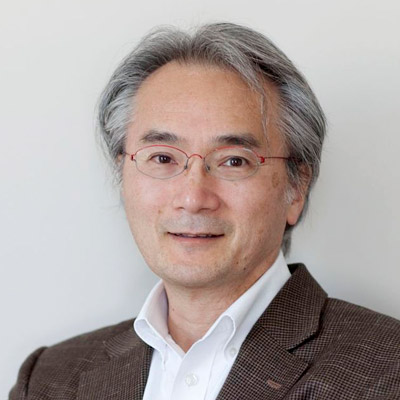
Paul Matsudaira, Founding Deputy Director
Emeritus Professor, Department of Biological Sciences, NUS
Formerly a biology and bioengineering professor at the Massachusetts Institute of Technology (MIT), Paul Matsudaira has studied the cytoskeleton since graduating from college. He was the EM technician of Tom Schroeder where he helped investigate the role of microfilaments in the contractile ring. As a graduate student of Dave Burgess he identified the structure and function of the intestine brush border cytoskeleton. Following postdoctoral research on the assembly of actin bundles at the MPI Biophysical Chemistry with Klaus Weber and the MRC LMB with Alan Weeds, Paul started his academic career at the Whitehead Institute and MIT where his lab studied biophysics of actin and other polymer protein bundles, mechanics of polymers and single cells motility, and developed microanalytical methods. In 2009, he moved to Singapore to establish the Centre for Bioimaging Sciences, head the Department of Biological Sciences, and help found the Mechanobiology Institute, National University of Singapore. Read more about Prof Matsudaira’s research