

Research @ MBI
Understanding the molecular basis for mechanotransduction
In cells and tissues, the integration and propagation of mechanical signals is facilitated by the activity of molecular machines; small groups of proteins that detect and respond to mechanical stimuli by transferring physical forces to other cellular components, or facilitating their conversion to biochemical signals.
The information obtained during this process, which is known as mechanosensing, helps in cellular decision making.This is particularly important during development, when stem cells are differentiating to become specific cell types, and during wound healing or tissue repair.
At MBI, we are exploring mechano-transduction though four major research programs: molecular, cellular, tissue, and through technological innovations.
Cells can measure the stiffness of the surface on which they are growing and they can detect and respond to tension from neighboring cells within a tissue. Understanding how individual cells and proteins contribute to the mechanotransduction of physical force, is a major focus in the research conducted at the MBI. Dissecting the nanoscale architecture of various molecular machines involves the manipulation of specific cellular components, and at times, single proteins or specific protein domains. We can then monitor any subsequent effects.
Crucial to these efforts is the ability to control and modify the physical parameters of the cellular microenvironment. This means growing cells on substrates of a specific stiffness, pattern or shape. The effect of any molecular manipulation must then be monitored by quantifying the forces generated by cells or individual proteins, or visualizing the effects using super-resolution microscopy techniques.
Molecular Mechanisms of Mechanobiology
At MBI, we investigate how groups of proteins come together to form modular functional units that are capable of mediating diverse cellular functions by sensing and relaying mechanical signals between various components of the cell. More
Cell-Matrix / Cell-Cell Mechanotransduction
MBI is working to understand how a cell’s behavior within a tissue is guided by its communication with neighboring cells and the extracellular matrix through the formation of protein-based adhesion complexes. More
Mechanotransduction in Tissue Development
At the MBI, we apply biophysical principles to study the highly-coordinated orchestration of cellular events in a tissue, and understand its relevance during the development of an embryo as well as during tissue repair in adult organisms. More
Technology Innovation for Mechanobiology
The state-of-the-art technology at MBI has expanded our understanding of cell mechanics, enabling us to manipulate the physical properties of the cellular microenvironment as well as to precisely quantify cellular response to mechanical signals. More
Recent Featured Research
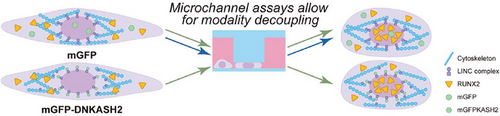
Confined Migration Shapes the Bony Fate of Stem Cells
Researchers from the Holle Lab at the Mechanobiology Institute, NUS discover that migration through confined spaces causes lasting nuclear changes in stem cells, biasing them toward bone formation.

Disrupted Cell-Matrix Interactions Drives Aging and Reveals New Paths for Skin Regeneration
Researchers from the Li Lab discover how α5-integrin–FN interactions preserve dermal integrity, offering new insights for antiaging strategies targeting ECM organization and fibroblast function.
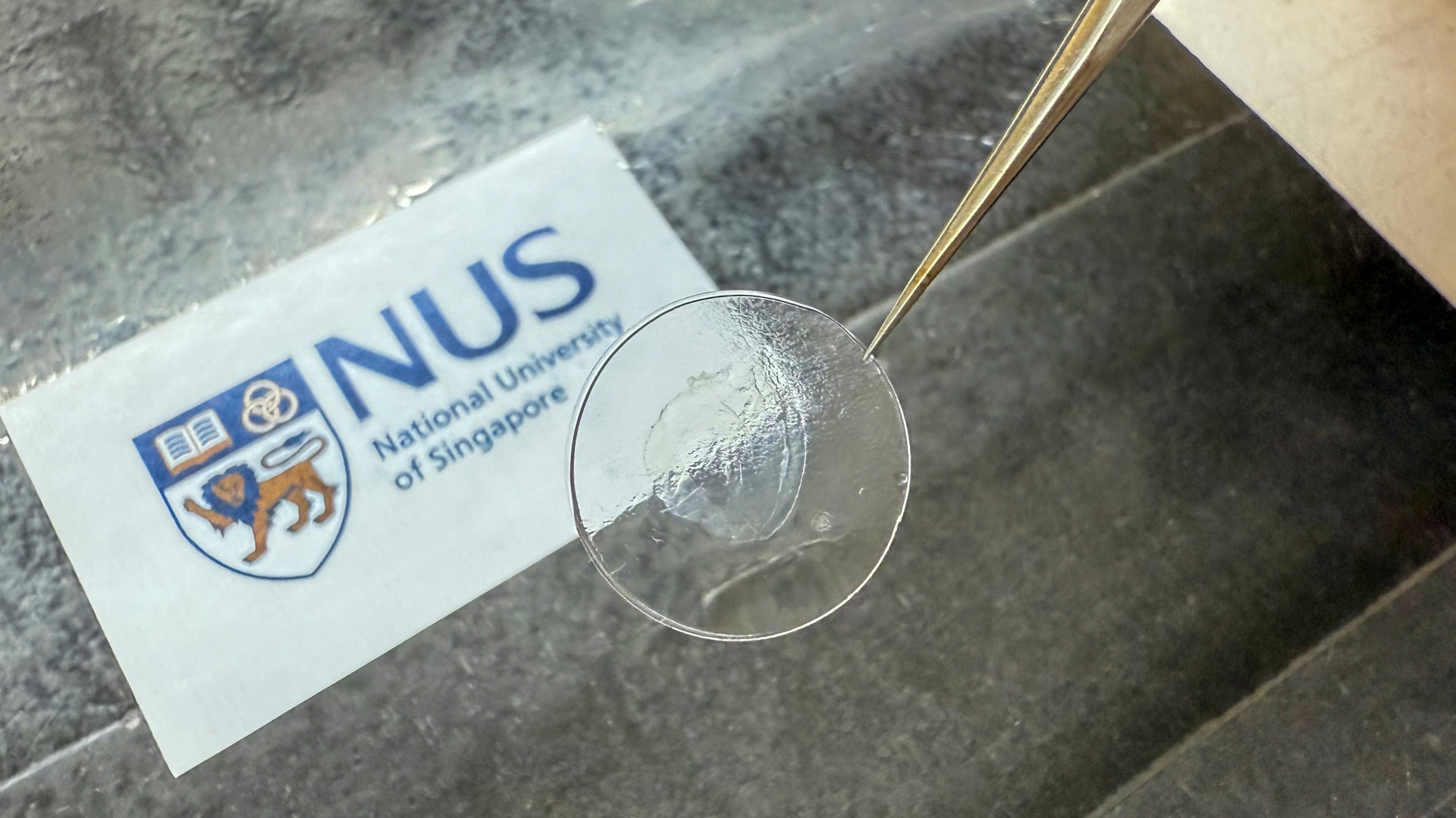
DECIPHERing the Role of Cell-Matrix Interactions in Ageing Heart Health
Researchers from the Soft Nano-Biomaterials Lab at MBI developed a material system to enable precise investigation into how individual ECM properties affect cultured heart cells.
Featured Publication

The Cell as a Machine
Part of Cambridge Texts in Biomedical Engineering
Published through Cambridge University Press and available in March of 2018, Professors Michael Sheetz and Hanry Yu have written a unique introductory text explaining cell functions using the engineering principles of robust devices.
Adopting a process-based approach to understanding cell and tissue biology, the book describes the molecular and mechanical features that enable the cell to be robust in operating its various components, and explores the ways in which molecular modules respond to environmental signals to execute complex functions.
Part I. Principle of Complex Function in Robust Machines:
- Robust self-replicating machines shaped by evolution
- Complex functions of robust machines with emergent properties
- Integrated complex functions with dynamic feedback
- Cells exhibit multiple states, each with different functions
- Life at low Reynolds number and the mesoscale leads to stochastic phenomena
Part II. Design and Operation of Complex Functions:
- Engineering lipid bilayers to provide fluid boundaries and mechanical controls
- Membrane trafficking – flow and barriers create asymmetries
- Signaling and cell volume control through ion transport and volume regulators
- Structuring a cell by cytoskeletal filaments
- Moving and maintaining functional assemblies with motors
- Microenvironment controls life, death and regeneration
- Adjusting cell shape and forces with dynamic filament networks
- DNA packaging for information retrieval and propagation
- Transcribing the right information and packaging for delivery
- Turning RNA into functional proteins and removing unwanted proteins
Part III. Coordination of Complex Functions:
- How to approach a coordinated function – cell rigidity sensing and force generation across length scale
- Integration of cellular functions for decision making
- Moving from omnipotency to stable differentiation
- Cancer versus regeneration – the wrong versus right response to the microenvironment.

She is a Scientist: Confidence Formed by Curiosity Over Time
February 11th celebrates The International Day of Women and Girls in Science to promote full, equal access and participation in STEM fields. MBI talks to two of our posdoctoral research fellows about their career as a woman in science.
MBI Publications
Latest Publications
- Truong HD, Ge Z, Chng E, Tran Y, Zhang Y, and Lim CT. Strategies to control cellular spatial organization in microphysiological systems. Microsyst Nanoeng 2026; 12(1). [PMID: 41807359]
- Nishimura R, and Kanchanawong P. Corrigendum to "Nanoscale mechano-adaption of integrin-based cell adhesions: New tools and techniques lead the way" [Curr. Opin. Cell Biol. 94 (2025) 102509]. Curr Opin Cell Biol 2026; 100:102629. [PMID: 41797153]
- Wu SK, Sun F, Ho CZ, Lou Y, Huang CB, Nai MH, Xiao J, Shagirov M, Chin JFL, Lim D, Verma S, Tan DSP, Marcq P, Yap AS, Lim CT, Hiraiwa T, Lin Y, and Low BC. Multiscale mechanisms driving tissue rupture by invading cells. Dev Cell 2026;. [PMID: 41785856]
- Yang B, Li B, Zhu Y, Zhao M, Cheng Y, Zhao X, En-Jie DT, Wang Y, Zhang M, Tang X, Jin S, Sun Y, Zhang X, Xue B, Yan J, Wu G, Lin Z, Luo M, Yu H, Zhang L, Chen X, and Ni Q. Rational design of rigid mRNA folding architecture to enhance intracellular processing and protein production. Nat Nanotechnol 2026;. [PMID: 41772191]
- Lin H, Kang S, Xie F, Lim YX, Seah SH, Sabbaghian A, Lu S, Chew TG, Deng L, Wang S, Tai E, and Lim YP. WBP2 Attenuates Metformin Response in HER2-Positive Breast Cancer Cells by Repressing AMPK Activation and Inducing a Lower AMP:ATP Ratio State Through Enhanced ATP Production. Cells 2026; 15(4). [PMID: 41744824]
- Chapa-Y-Lazo B, Athilingam T, Tiwari P, Pathak P, Zhang S, Theis S, and Saunders TE. Identification of optimal fluorophores for use in the Drosophila embryo. Mol Biol Cell 2026;:mbcE25120600. [PMID: 41705958]
- Lu Y, Walji T, Pandey P, Zhou C, Habela CW, Snapper SB, Li R, and Chen EH. Branched actin polymerization drives invasive protrusion formation to promote myoblast fusion during mouse skeletal muscle regeneration. Elife 2026; 14. [PMID: 41608858]
- da Silva RAG, Tien BYQ, Kao PHN, Antypas H, Celik C, Tan AZC, Ismail MH, Hu G, Chong KKL, Thibault G, Chen J, and Kline KA. Enterococcus faecalis-derived lactic acid suppresses macrophage activation to facilitate persistent and polymicrobial wound infections. Cell Host Microbe 2026;. [PMID: 41605216]
- Naripogu KB, Tee YH, Senju Y, Bershadsky A, and Robinson RC. Localization of Asgard archaeal ESCRT proteins to eukaryotic cellular structures. Biochem Biophys Res Commun 2026; 802:153301. [PMID: 41576632]
- Tan AMZ, Celik C, Lee SYT, Veleba M, Manzano CS, Abdul RMK, Thibault G, and Kline KA. Enterococcus faecalis redox metabolism activates the unfolded protein response to impair wound healing. Sci Adv 2026; 12(3):eaeb5297. [PMID: 41544166]
How Structural Imbalance Drives Inflammatory Signaling in Senescent Cells
In a study published in Molecular Biology of the Cell led by Celestine Ho at the Mechanobiology Institute, NUS, researchers discover that HIF-1α-activation in SASP is a defining feature of the SASP induced by diverse stressors, acting independently of micronuclei generation and cGAS/STING activation.
Violet vs. Blue: Controlling Mechanotransduction with a Single-protein Light Switch
In a study published in the Journal of Cell Science, led by Ryosuke Nishimura at the Mechanobiology Institute, NUS, researchers developed an optogenetic tool to precisely manipulate talin’s structure and observe the resulting cellular behavior.
The Pressure That Shapes Life: Mechanical Forces Behind Egg Maturation
Researchers from the Chan Lab at MBI demonstrate the importance of compressive stress exhibited by theca cells in healthy follicle maturation and surrounding support cells, suggesting a new perspective in understanding infertility.