

Mechanobiology Institute’s Governing Board
The Governing Board oversees the mission of the Institute by providing strategic direction and good stewardship.
The Governing Board serves to ensure the alignment of research carried out in MBI through regular appraisals and reviews of the performance of the institute. It also oversees the implementation of all governance policies, financial accountability and ethical conduct in research.
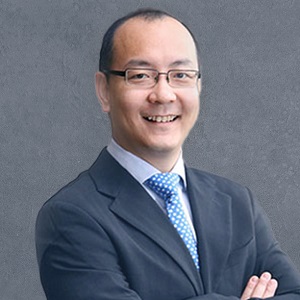
Prof Chng Wee Joo
Chair, MBI Governing Board
Vice President (Biomedical Sciences Research), NUS
Prof. Chng Wee Joo is Vice President (Biomedical Sciences Research) at the National University of Singapore. In this role, he spearheads the development of the University’s biomedical-related research, as well as strategic collaborations with academic institutes, hospitals and industrial partners. Prof. Chng is also the Yong Loo Lin Professor in Medical Oncology, Group Director of Research at the National University Health System, and the inaugural Executive Director of the Singapore Translational Cancer Consortium.
A hematologist by training, Prof. Chng is an esteemed researcher in the fields of genomics, therapeutics and hematologic malignancies, with a wealth of experience spanning clinical practice, administration, and leadership. He has produced highly translational research, including using global genomic techniques to understand drug resistance and improve disease prognosis in hematological malignancies — that has helped to personalise treatment and improve patient outcomes. Prof Chng’s impactful research has won him numerous national and global accolades, including the International Myeloma Foundation’s Brian G.M. Durie Outstanding Achievement Award in 2020 — becoming the first in Asia to achieve this honour — and the National Medical Research Council’s National Outstanding Clinician Scientist Award in 2016.
Prof. Chng has been a Senior Consultant at the National University Hospital for over two decades, and was Vice Dean of Research at the Yong Loo Lin School of Medicine (2022 – 2023), Director of the National University Cancer Institute, Singapore (2014– 2023), and Provost’s Chair (2018 – 2022). He is also a member of numerous leading national and international professional committees, including the American Association of Cancer Research, and was former President of the Singapore Society of Hematology.
Prof. Chng obtained his medical degree from the University of Leeds, and completed his internal medicine residency and fellowship training in hematology in the United Kingdom and Singapore respectively.
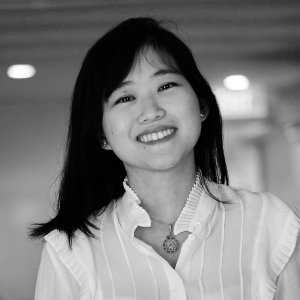
Ms Amanda Ang
Member, MBI Governing Board
Director (Human Health and Potential), National Research Foundation Singapore
Ms. Amanda Ang is the Director of Human Health and Potential (HHP) at the National Research Foundation (NRF) Singapore. She is responsible for coordinating across agencies and research institutions to develop and implement strategies to achieve Singapore’s goals of being a leading biomedical hub that transforms and protects health, advances human potential and creates economic value.
Ms. Ang has around 15 years of experience in biomedical healthcare strategy and R&D policy. In the public sector, she was most recently Director of the Health and Biomedical Cluster at the Biomedical Research Council , Agency for Science, Technology and Research (A*STAR). In this role, she oversaw the development of research and translational programmes in the biotech, biomanufacturing, precision medicine and medtech fields. She played a leading role to develop Singapore’s Biotech R&D Strategy for RIE2025, under the guidance of the CEO of NRF and the HHP EXCO Chair. In industry, Ms. Ang has worked at Johnson & Johnson to develop a well-defined government affairs strategy across the pharmaceuticals, medtech and consumer health sectors in Asia Pacific. At Boston Scientific, she held roles in regional marketing, product management and strategy for interventional cardiology and structural heart medical device products, overseeing the marketing and market access needs for the Asia, Middle East and Africa region.
Ms. Ang has a Bachelor of Arts in Biological Sciences from the University of Chicago and an MBA from INSEAD.

Prof Thomas M. Coffman
Member, MBI Governing Board
Dean, Duke-NUS Medical School and James R. Clapp Professor of Medicine, Duke University Medical Center
Prof. Thomas Coffman is Dean of Duke-NUS Medical School and Founding Professor in its Cardiovascular and Metabolic Disorders Signature Research Programme (SRP). He is also the James R. Clapp Professor of Medicine at Duke University Medical Center where he spent almost 18 years as Chief of the Division of Nephrology and served as Senior Vice-Chair in the Department of Medicine.
Prof. Coffman graduated from the University of Pennsylvania and obtained his MD from the Ohio State University School of Medicine. He moved to Duke for medicine residency and nephrology fellowship, joining the faculty in 1985 to pursue his career as a clinician and researcher. Along with his leadership of the Division of Nephrology, Prof. Coffman was the founding director of the Duke Cardiovascular Research Center and the Duke O’Brien Center for Kidney Research. He joined Duke-NUS in 2010 as Director of the Cardiovascular and Metabolic Disorders SRP. Prof. Coffman was appointed Dean at Duke-NUS on 1 July 2015. He is also a member of the SingHealth Board of Directors.
An international leader in the field of nephrology, Prof. Coffman is a Past-President of the American Society of Nephrology. He is also a member of the American Society for Clinical Investigation and the Association of American Physicians and served on the Nephrology Subspecialty Board of the American Board of Internal Medicine. Prof. Coffman has served on a number of editorial boards including Physiological Reviews and Cell Metabolism, and currently serves as Associate Editor of the Journal of Clinical Investigation. He is a Fellow of the Councils for High Blood Pressure Research and the Kidney in Cardiovascular Disease of the American Heart Association (AHA) and serves on the Leadership Committee for the AHA Council for High Blood Pressure Research. Prof. Coffman’s research interests include the renin-angiotensin and prostanoid systems, and diabetic nephropathy.
Prof. Coffman was conferred the 2014 Excellence Award for Hypertension Research from the AHA Council on Hypertension recognizing researchers who have made a major impact in the field of hypertension and whose research has contributed to the improved treatment and greater understanding of high blood pressure. He also received the 2014 Distinguished Faculty Award from the Duke Medical Alumni Association as well as the 2022 Alumni Achievement Award from The Ohio State University, College of Medicine.
Currently, Prof. Coffman sits on the boards of various institutions locally and internationally including Singapore Health Services (SingHealth), Singapore Eye Research Institute (SERI), and Singapore National Medical Research Council (NMRC). He is also serving as the Chairman of the Medical Advisory Committee at the National Kidney Foundation (NKF) Singapore.
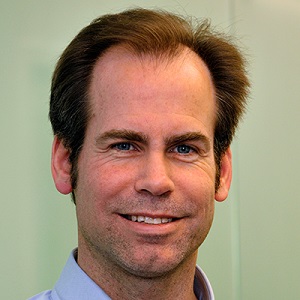
Prof Dennis Discher
Member, MBI Governing Board
Robert D. Bent Professor, University of Pennsylvania, USA
Prof. Dennis Discher is the Robert D. Bent chaired Professor at the University of Pennsylvania and Director of the NCI (National Cancer Institute) Physical Sciences Oncology Center/Project at Penn. He is an elected member of both the US National Academy of Medicine and the US National Academy of Engineering, and he is recipient of the Shu Chien Scientific Achievement Award from BMES’ Cell & Molecular Bioengineering (CMBE) group. Prof. Discher holds appointments in the School of Engineering & Applied Science and Graduate Groups in Pharmacology and in Physics, and he has been at Penn since 1996.
His efforts to train broadly start with his lab’s >60 PhD students and Fellows who bring a wide range of experiences. It extends to creation of Mid- career Awards with suitably broad criteria for CMBE and for the Biophysical Society’s Mechanobiology Subgroup, as well as annual summer projects over the past decade by two Philadelphia High School Teachers and for two or more Undergraduates from around the US.
The Discher lab’s most cited work is among the top-5 cited research papers in Cell since its publication: ‘Matrix elasticity directs stem cell lineage specification’, and other papers range in topic from the mechanobiology of cancers, cardiomyocytes, and nuclei to controlling ‘Self’ recognition via engineered macrophages and particles in application to disease, particularly cancer. He has coauthored more than 250 publications with >85,000 citations, with papers appearing in Science, Cell, PNAS, and Nature family journals. Service includes various roles in CEMB, the American Society of Cell Biology (ASCB), and the Biophysical Society, as well as NIH grant reviewer including chairperson (Gene & Drug Delivery, Phys Sci Oncology, etc.) and Editorial Board service for Science, Molecular Biology of the Cell, and PNAS & PNAS Nexus.

Dr Wen Qi Ho
Member, MBI Governing Board
Therapeutics Lead, ClavystBio
Dr. Wen Qi Ho is the Therapeutics Lead for ClavystBio, where she focuses on investing in and building global healthcare companies from Singapore. ClavystBio was established by Temasek to accelerate the commercialization of life science breakthrough from ideation to health impact. Prior to joining ClavystBio, she headed up the Singapore investments and operations for Lightstone Ventures, where she played a major role in establishing the firm’s presence in Singapore. Dr. Ho evaluated new investment opportunities in the biopharmaceutical and medical device sectors, and was actively involved in venture-building portfolio companies in Singapore such as Medisix Therapeutics, Allay Therapeutics and Ligature Therapeutics.
In her academic career, Dr. Ho worked at the Singapore Immunology Network, where her research was focused on the immunological basis of allergic diseases. She is an advocate for early career researcher participation in biotech entrepreneurship, and serves on advisory and grant review panels with leading institutions in Singapore. She also serves on the Board of Directors of Automera, Engine Biosciences, MediSix Therapeutics, and the steering committee of 65LAB.
Dr. Ho holds a PhD in Immunology at Stanford University, and BSc in Molecular and Cellular Biology at Johns Hopkins University. She was also the recipient of the National Science Scholarship from A*STAR.
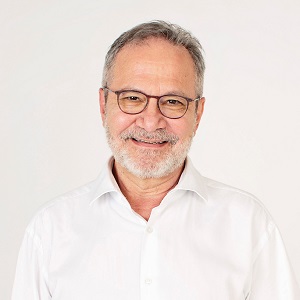
Prof David B. Matchar
Member, MBI Governing Board
Professor, Signature Research Programme in Health Services & Systems Research, Duke-NUS Medical School
Prof. David B. Matchar, MD, is the Inaugural Director of the Programme in Health Services and Systems Research (HSSR) (2008-2018). He is also Professor of Medicine at Duke University in the United States. He currently serves as lead economic and policy analyst to the Singapore clinical genomics program, PRECISE, and consultant to the Ministry of Health national initiative for healthcare transformation, Healthier SG.
Prof. Matchar received his AB in Statistics from Princeton University. After completing his MD degree and residency training he served as fellow in the Department of Internal Medicine at Duke. He has worked in clinical research for over 35 years; his work primarily relates to stroke and other chronically disabling neurological disorders, as well as clinical and public policy analysis. He served as Director of the Duke Center for Clinical Health Policy Research and established the Duke Evidence-based Practice Center, which was responsible for analysis in support of coverage policy for the US Centers for Medicare and Medicaid Services, as well as guidelines for medical professional societies.
While the content of Prof. Matchar’s research spans the range of clinical medicine, the essential nature of his work has involved integration of researchers from multiple disciplines under a common conceptual framework, to address important and complex healthcare issues. His overarching goal has been to promote the use of best evidence to support clinical and public policy decision making. A fundamental challenge is how to bridge the gap between analysts and decision makers —a challenge made more difficult when the issues involve multiple stakeholders, competing priorities, and are complex in detail and dynamics (involve potential undesirable consequences due to feedback or time delays). For this work, Singapore has been an especially receptive environment for innovation in health services research.
Ultimately, Prof. Matchar’s objective is to facilitate the work of the HSSR , to enhance health services research in SingHealth and other healthcare clusters, and to establish a robust education program in Health Services and Systems Research that will serve Singapore and the region into the future.

Prof Rong Li
Member, MBI Governing Board
Director and Principal Investigator, Mechanobiology Institute, NUS
Distinguished Professor, Department of Biological Sciences, NUS
Professor Li is a globally respected leader in the study of cellular dynamics and mechanics. Her interdisciplinary research integrates genetics, quantitative imaging, biophysical measurements, mathematical modelling, genomics and proteomics — to understand how eukaryotic cells transmit their genomes, adapt to the environment, and establish distinct organisation to perform specialised functions. She has made seminal discoveries in the regulation of cell division, cell polarity, the actin cytoskeleton, aneuploidy and proteostasis. The insights gained from her research have contributed to the fundamental understanding of cancer and age-related diseases.
She has had over 125 papers published in peer-reviewed journals, with many appearing in top-tier publications such as Cell, Nature and Science. Her work has received more than 14,000 citations. Professor Li has served on editorial boards of Molecular Biology of the Cell, Development, Biophysical Journal, and BMC-Cell Biology.